
Skills: Content Strategy
Challenge
As part of the marketing team at 3Degrees, a global climate solutions provider, we began exploring how AI might support our work. Since text-based output is one of the most popular uses for AI (think ChatGPT),, content creation felt like a natural place to start.
While the idea was exciting, there was hesitation around using AI in ways that could undermine our integrity or dilute the human expertise behind our content. For instance, allowing AI to write blogs or case studies from scratch did not align with how the team worked or how we wanted to show up.
With that approach off the table, I began thinking about AI less as a creative substitute and more as a productivity tool. That led me to a longstanding challenge. We wanted to extend the life of content we had already created but lacked an efficient way to repurpose it into new formats. High-quality insights were being shared once and then quickly fading, largely because each new asset required a significant creative and logistical lift.
I saw an opportunity to use AI to support the workflow itself and help us get more value from existing content without sacrificing quality or human judgment.
Solution
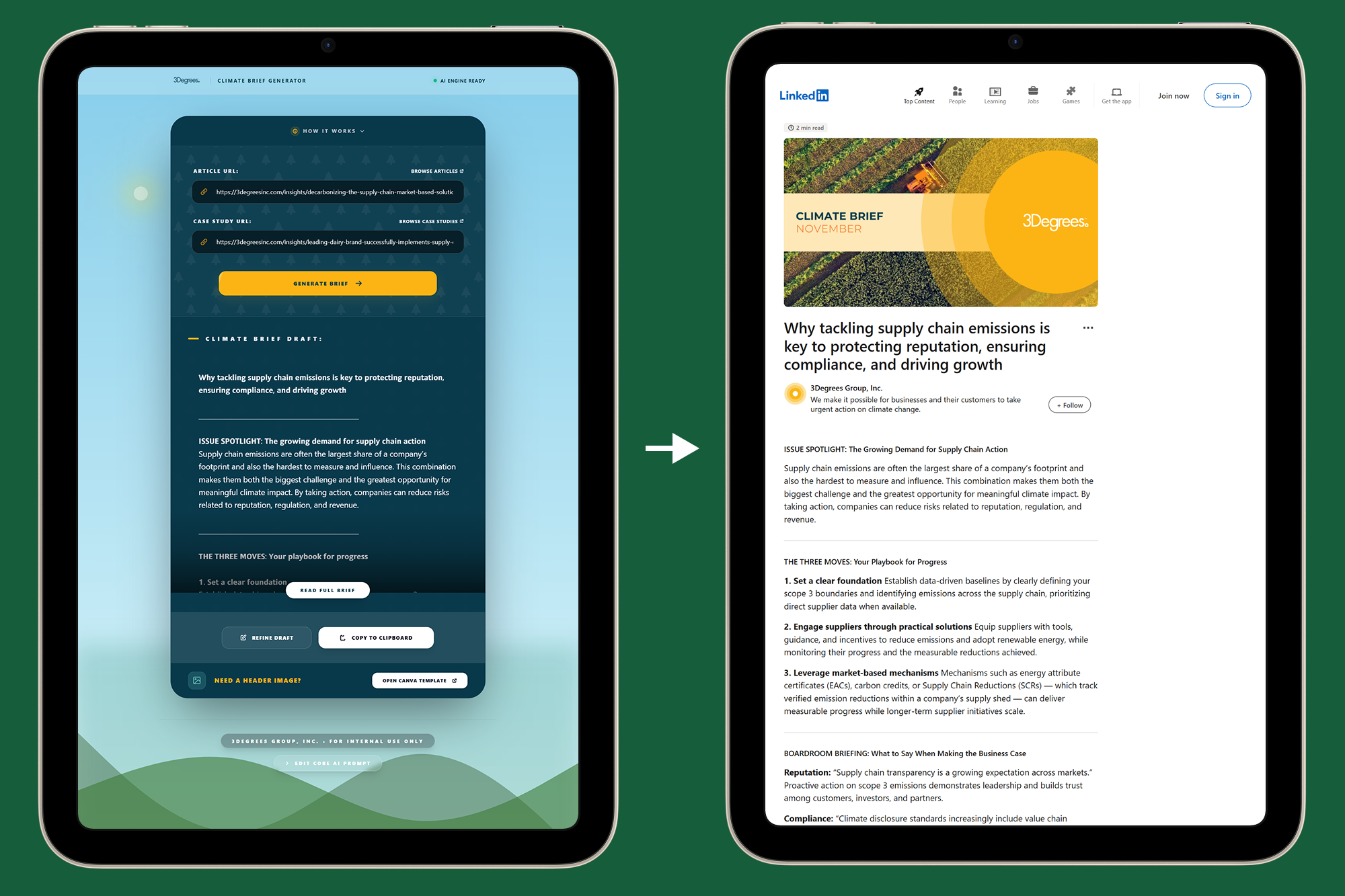
I created the 3Degrees Climate Brief, a monthly LinkedIn newsletter that synthesizes one previously published blog and one case study into a short, actionable briefing on a timely climate topic. The format is designed to help readers quickly understand the issue and leave with information they can use to support climate action within their organizations.
To make this repeatable, I built an AI-powered app (called the “Climate Brief Generator”) where users input links to the source content and generate a draft with the tap of a button. Prompt logic, structure, and formatting are centralized, removing manual setup and ensuring consistency across outputs. The newsletter serves as a pilot for a reliable, repeatable format for creating derivative content and the app eliminates guesswork around how to execute it.
Result
The Climate Brief established a practical entry point for using AI on the team. It reduced time to draft, standardized the repurposing process, and made adoption feel natural rather than forced.
More broadly, it demonstrated how AI could be applied as a productivity tool, improving speed and consistency while keeping editorial judgment firmly in human hands.